
Research Project
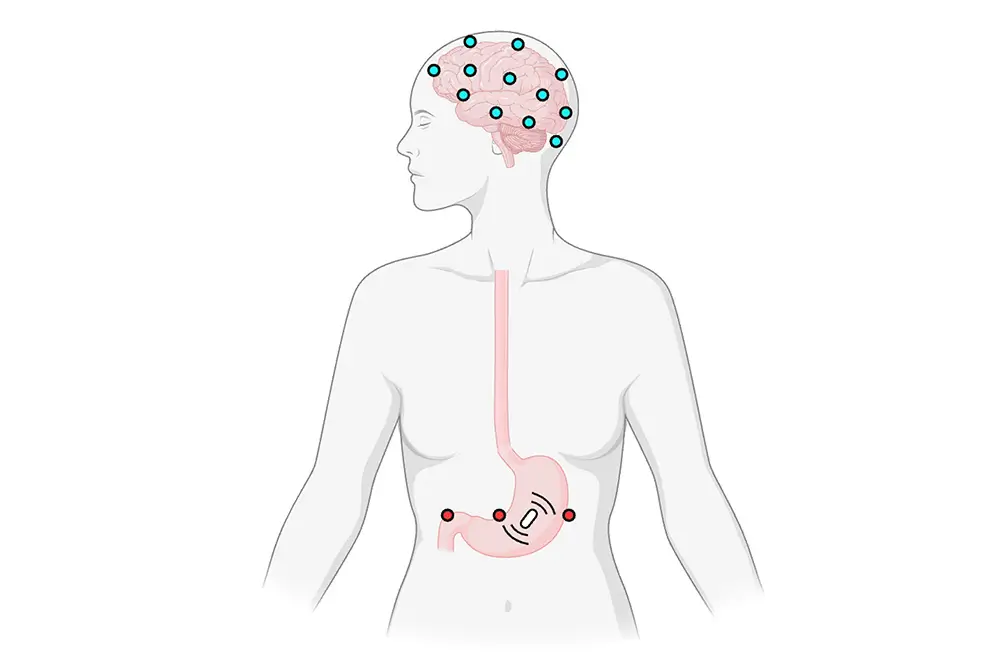
Gut-Brain Interoception in Anorexia Nervosa
Anorexia nervosa (AN) is a severe, enduring, and often treatment-refractory eating disorder. We hypothesize that abnormal gut-brain signaling underlies the fear of eating and interoceptive dysregulation in AN, serving to maintain the illness. Using a novel ingestible vibrating capsule to probe gut mechanosensation, combined with EEG and computational modeling, we are characterizing gut-brain phenotypes and evaluating potential biomarkers of illness and treatment response.
Methods Used
- Ingestible vibrating capsule (gut mechanosensation)
- electroencephalography (EEG) (gastric-evoked potentials)
- high-density body surface gastric mapping (BSGM)
- machine learning (LASSO logistic regression, k-means clustering, SHAP analysis
Key Findings
Combining the vibrating capsule with EEG identified a “gastric-evoked potential” (GEP) in the brain in parieto-occipital scalp leads (Nature Communications 2023). Our ongoing National Institutes of Health (NIH)-funded R01 project leverages this protocol to identify potential biomarkers of illness and treatment response.
Key publications
Nat Commun 2023 (doi:10.1038/s41467-023-39058-4); EClinicalMedicine 2023 (doi:10.1016/j.eclinm.2023.102173); Gastroenterology 2025 (doi:10.1053/j.gastro.2025.04.002)
Funding source(s)
R01MH127225 (NIMH); BSF 2023143 (US-Israel Binational Science Foundation); K23MH112949 (completed)
Collaborators
- Martin Paulus (LIBR);
- Justin Feinstein (LIBR);
- Walter Kaye (UCSD);
- Galia Avidan (BSF grant co-MPI)