
Research Project
Floatation-REST: A Novel Sensory-Based Treatment for Anxiety and Eating Disorders
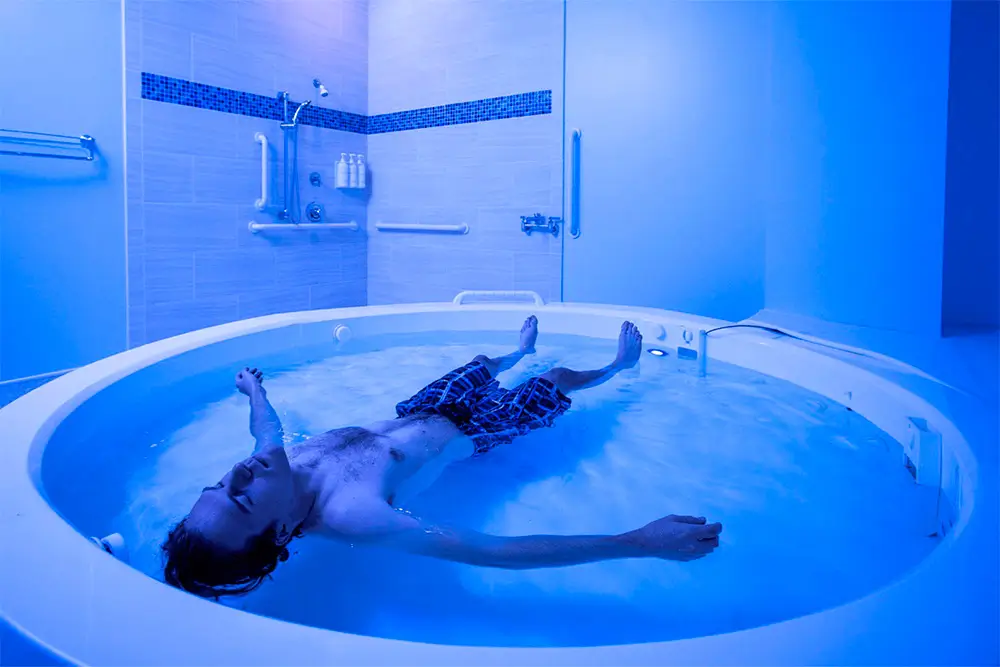
Floatation-REST (Reduced Environmental Stimulation Therapy) involves floating in a soundproof, lightproof, warm shallow pool filled with dense saltwater. We have conducted the majority of the world’s clinical trials of floatation-REST in anxiety and depression, eating disorders, and addiction. Our studies have demonstrated the safety and feasibility of this intervention in these populations. Further, we have found that it reliably reduces anxiety and stress, body image dissatisfaction, and increases positive affect and feelings of wellbeing, with some effects persisting up to 6 months in AN.
Methods Used
- Randomized clinical trial design
- experience sampling
- blood pressure
- fMRI
- heart rate variability
- EEG
- self-report measures (BAI, PHQ-9, EDE-Q)
- functional MRI (fMRI) functional connectivity analysis
Key Findings
Floatation-REST reduces body image disturbance and anxiety in AN at 6-month follow-up (EClinicalMedicine 2023). Acute anxiolytic effects in anxious and depressed individuals confirmed across multiple trials. Recent work identified reduced craving and increased positive affect in methamphetamine use disorder. Across all studies, floatation-REST increased cardiorespiratory interoception and the positive valence of cardiorespiratory sensations in these conditions.
Key publications
EClinicalMedicine 2023 (doi:10.1016/j.eclinm.2023.102173); PLoS One 2024 (doi:10.1371/journal.pone.0286899); BPCNNI 2018 (doi:10.1016/j.bpsc.2018.02.005)
Funding source(s)
R34AT009889 (NCCIH)
Collaborators
- Justin Feinstein (LIBR);
- Martin Paulus (LIBR);
- Murray Stein (UCSD)